Spa-inspired bathroom with freestanding tub and natural stone

    Bathroom Design

    Your private spa — where daily routines become moments of genuine restoration

    "
    The best bathrooms feel like they were always meant to be there — materials that make sense for the space, light that flatters, and storage that keeps surfaces effortlessly clean.
    The Complete Guide

    Everything you need to know about bathroom design

    Bathroom design operates under constraints no other room faces: compact footprints, fixed plumbing positions, high-moisture environments, and the need to serve both energizing morning routines and calming evening rituals within the same four walls. The most successful bathroom renovations treat these constraints as design challenges rather than limitations — finding solutions that make even the smallest spaces feel expansive and quietly luxurious.

    Tile is the dominant material in most bathrooms, making tile selection the single most consequential aesthetic decision in any bathroom project. Large-format tiles (24x24 inches or larger) with minimal grout lines make spaces read as more expansive. Vertical tile stacking creates the illusion of height. Using the same tile continuously across floor, shower floor, and shower walls — a technique borrowed from European spa design — dissolves visual boundaries and dramatically amplifies the perceived size of any room.

    Fixtures define a bathroom's personality and establish its apparent price point at a glance. A freestanding soaking tub signals luxury and intention even when nothing else in the room is particularly expensive. A wall-hung floating vanity makes daily floor cleaning effortless while adding a clean contemporary edge. Matte black fixtures have largely displaced polished chrome as the contemporary default, though unlacquered brass is gaining ground for the warmth and living patina it develops over years of use.

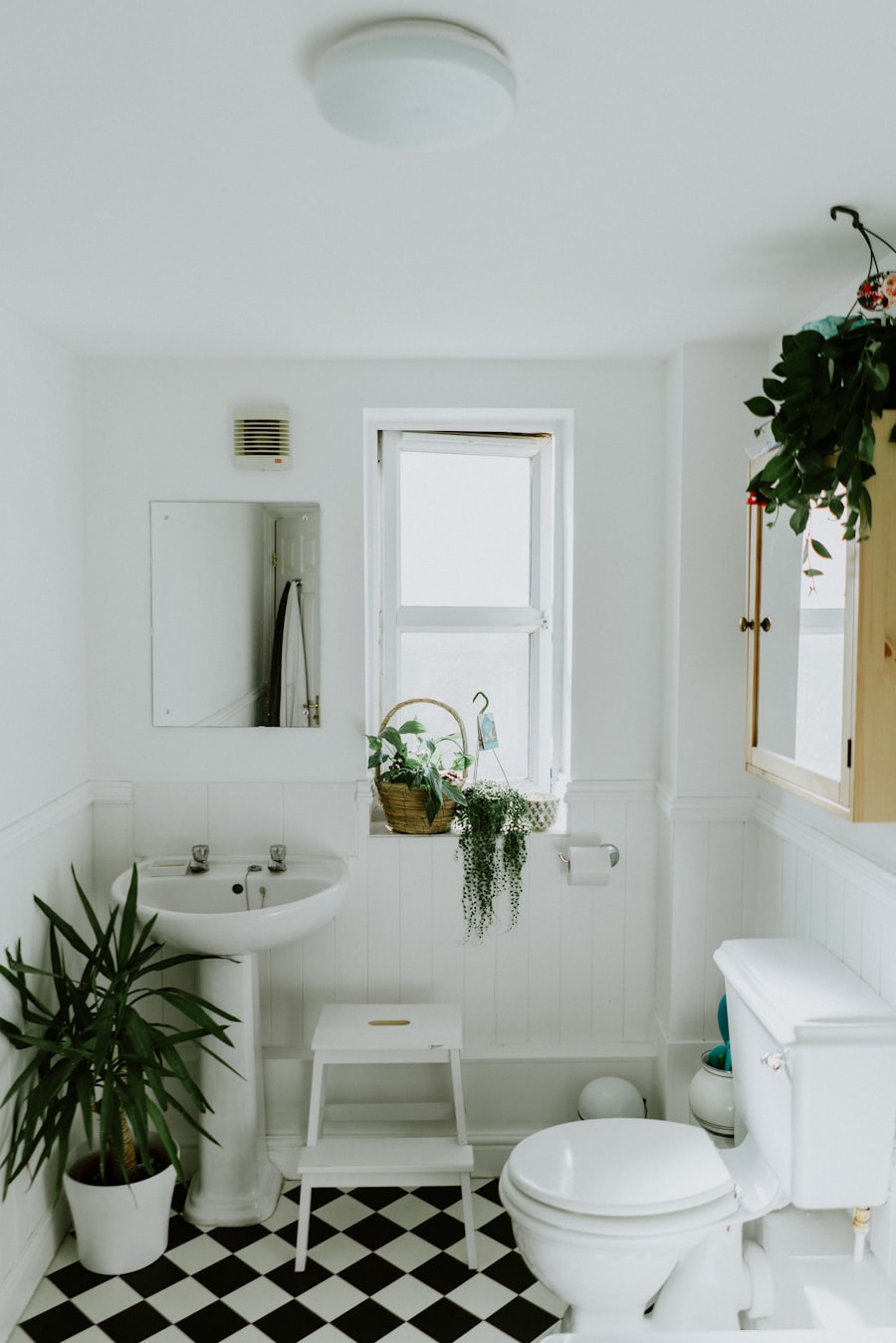
    Bathroom with large-format tiles running continuously from floor to shower walls
    01 / Bathroom Design

    Tile as Architecture

    In most bathrooms, tile covers the floor, the shower walls, and often significant portions of the remaining walls — making it the dominant material by square footage. The consequence is that tile selection is not a detail decision; it is the architectural decision from which every other material choice should flow outward.

    Large-format tiles create visual expansiveness that smaller tiles simply cannot replicate. Fewer grout lines mean the eye travels across the surface without interruption, making the room appear larger and more serene. Conversely, small mosaic tiles — beautiful for their texture and handcrafted quality — visually fragment surfaces and can make compact bathrooms feel genuinely cramped when applied over large areas.

    The most powerful spatial technique in tile design is through-plane continuity: using the same tile on the shower floor, shower walls, and bathroom floor — particularly in large format — dissolves the visual boundary between shower enclosure and the surrounding room. The bathroom reads as a single unified space rather than a series of distinct zones, and the effect of spaciousness is dramatic even in rooms that are objectively small.

    Premium bathroom fixtures including matte black faucets and freestanding tub
    02 / Bathroom Design

    Fixtures That Define the Room's Character

    Bathroom fixtures — faucets, showerheads, towel bars, toilet paper holders, robe hooks — collectively establish the room's aesthetic register more precisely than almost any other decision. They are the details a guest registers immediately, even before consciously noticing the tile or vanity. Getting the metal finish right and maintaining consistency across all pieces is one of the most cost-effective ways to elevate a bathroom's perceived quality.

    Matte black has become the dominant contemporary finish for defensible reasons: it photographs beautifully, shows minimal water spotting compared to polished chrome, and reads as intentional and current. Brushed nickel remains the most versatile neutral — neither as cold as chrome nor as statement-making as black. Unlacquered brass develops a living patina over time that many find more attractive than the original finish; it suits warm, traditional, or eclectic spaces but commits you to a specific aesthetic direction.

    A freestanding soaking tub is worth addressing directly because it is one of the most aspirational bathroom elements and one of the most frequently misused. A freestanding tub in a bathroom that lacks space for it to float freely — with clear sight lines and adequate clearance on all sides — looks trapped rather than luxurious. The minimum clearance around a freestanding tub is 18 inches on all accessible sides. If your bathroom cannot provide this, a well-designed built-in soaker is the more successful design choice.

    Spa-like bathroom with layered lighting and built-in storage keeping surfaces clear
    03 / Bathroom Design

    Lighting and Storage: The Functional Core

    Bathroom lighting serves two functions that are in direct tension: task lighting for grooming and ambient lighting for relaxation. The mistake most bathrooms make is optimizing entirely for one at the expense of the other — either a single harsh overhead fixture that illuminates every detail with unflattering downward light, or soft accent lighting that makes applying makeup or shaving impossible.

    The solution is separate circuits for separate purposes. Overhead recessed downlights on one circuit handle ambient lighting and shower illumination. Vanity sidelights on a second circuit — vertical fixtures or sconces flanking the mirror at face height — provide the even, shadow-free illumination that grooming requires. Both circuits on independent dimmers give you a spa-like bathing environment and a practical grooming station in the same room.

    Bathroom storage deserves the same design attention as bathroom aesthetics. A medicine cabinet with interior lighting keeps the vanity surface clear and puts everyday items exactly where they are needed. Recessed tile niches in the shower — planned before any tile work begins — eliminate plastic caddies and give the shower a finished, purposeful appearance. Drawers rather than cabinet doors under the vanity organize smaller items without requiring everything to be retrieved from one open space.

    Foundational Knowledge

    Design principles for bathroom design

    Extend Tile to Create Space
    01

    Extend Tile to Create Space

    Large-format tiles with tight grout joints and continuity from floor through shower walls dramatically expand how a bathroom reads spatially. For compact bathrooms, this single material decision makes a bigger visual impact than any fixture choice.

    Layer Lighting at Face Level
    02

    Layer Lighting at Face Level

    Overhead recessed cans plus vanity sidelights at face height. Never rely on a single fixture centered above the mirror — it creates unflattering downward shadows. Vertical fixtures flanking the mirror are the consistent gold standard.

    Design Storage Before Selecting Fixtures
    03

    Design Storage Before Selecting Fixtures

    A medicine cabinet with interior lighting, recessed shower niches, and a vanity with organized drawers eliminate surface clutter before it forms. A beautiful bathroom covered in product bottles looks like a storage problem, not a design.

    Actionable Advice

    Pro tips for bathroom design

    01

    Add Radiant Floor Heating

    In-floor radiant heat costs $10 to $15 per square foot to install during a renovation and pennies per day to run. In a bathroom, it elevates the daily experience more than almost any fixture upgrade at any price point.

    02

    Plan Shower Niches Before Tile

    Recessed tile niches in the shower wall eliminate plastic corner caddies and give products a permanent, built-in home. These must be planned and built before any tile work begins — retrofitting them afterward requires tearing out finished wall.

    03

    Anchor Towel Bars into Studs

    Towel bars and robe hooks must be secured into wall studs or blocking, not just drywall anchors. Daily loading from wet towels pulls drywall anchors loose within months. Add blocking during rough-in where needed.

    04

    Choose Mid-Tone Grout

    White grout shows stains within weeks. Dark grout hides them but can date a design quickly. A mid-tone unsanded grout in a color close to the tile body is typically the most forgiving and timeless choice available.

    05

    Right-Size Your Exhaust Fan

    An undersized exhaust fan leads to mold growth, paint failure, and mirror fogging. Match the CFM rating to the room cubic footage. Run the fan for at least 20 minutes after every shower — not just while you are in it.

    Keep Exploring

    More room categories