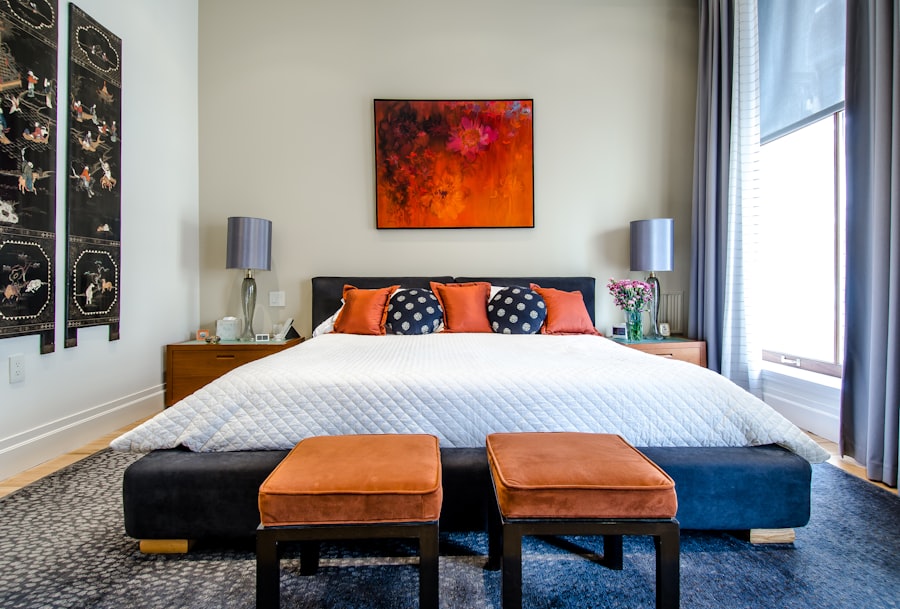
Your bedroom should be the calmest room in your home — a personal retreat where the noise of the outside world fades away. Creating a serene bedroom is not about following rigid rules; it is about designing a space that speaks to your senses in soothing ways. From the colors on your walls to the texture of your sheets, every detail contributes to an atmosphere of peace. Here is how to design a bedroom retreat that restores you every single night. For more inspiration, browse our bedroom design category.
Choose a Calming Color Palette
The colors in your bedroom directly affect your mood and sleep quality. Soft, muted tones — pale blues, warm whites, sage greens, and gentle lavenders — are scientifically proven to promote relaxation. Avoid high-contrast or overly saturated colors that stimulate the brain. If you love color, use it sparingly through accent pillows or artwork while keeping walls and large surfaces in calming neutrals. The goal is a palette that feels like a visual deep breath every time you enter the room.
Layer Your Bedding Thoughtfully
The bed is the centerpiece of any bedroom, and luxurious bedding is the quickest path to a serene atmosphere. Start with high-quality sheets in natural fibers — cotton percale for crispness or linen for relaxed elegance. Layer a lightweight duvet with a textured throw at the foot of the bed. Add European shams for a hotel-inspired look, and choose pillows in varying sizes for depth. The key is creating a bed that looks so inviting you cannot wait to sink into it at the end of each day.
Control Light and Sound
A truly serene bedroom addresses all the senses, including light and sound. Invest in blackout curtains or lined drapes that block outside light for deeper sleep. Layer your lighting with a dimmer on overhead fixtures and warm-toned bedside lamps for evening reading. Consider a white noise machine or soft background sounds if street noise is an issue. The ability to control your environment — darkening the room completely or creating soft ambient glow — is essential for transforming a bedroom into a genuine retreat.
Minimize Clutter and Distractions
Clutter is the enemy of serenity. A bedroom filled with piles of clothes, stacks of books, and scattered accessories creates subconscious stress that undermines relaxation. Invest in adequate storage — a dresser with deep drawers, under-bed storage bins, and a closet organization system. Keep nightstands clear except for essentials: a lamp, a book, perhaps a small plant. Consider removing the television from the bedroom entirely. A clutter-free space allows your mind to decompress naturally and supports better sleep habits.
A serene bedroom is not a luxury — it is a necessity for well-being. By thoughtfully addressing color, texture, light, and clutter, you create a sanctuary that nourishes you deeply every night. If you're looking to refresh your space without overspending, check out our guide on how to save money in home decor.
Frequently Asked Questions
- What is the most relaxing bedroom color?
- Soft blue is widely considered the most relaxing bedroom color, as studies show it lowers heart rate and blood pressure. Warm neutrals, sage green, and soft lavender are also excellent calming choices.
- Should I remove electronics from my bedroom?
- Yes, removing screens from the bedroom improves sleep quality significantly. If you must keep a phone nearby, place it face-down and enable night mode to minimize blue light disruption.